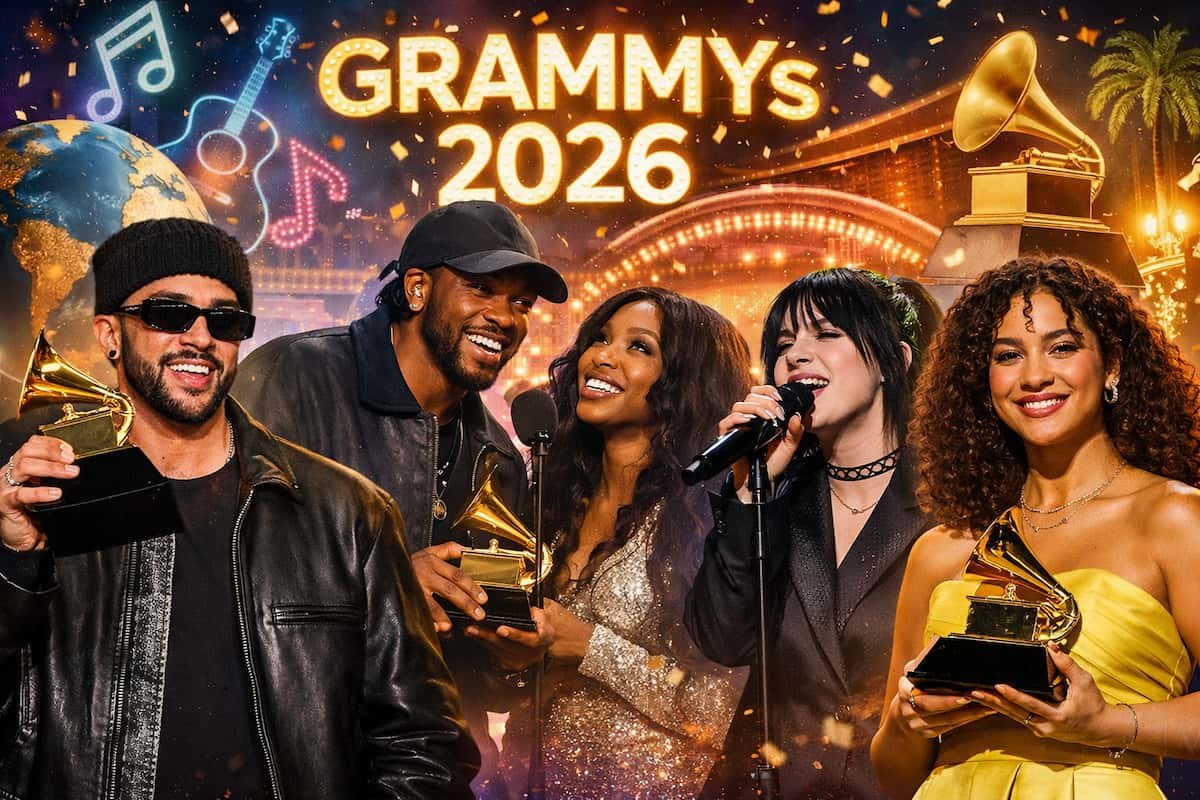
The 2026 Grammy Awards: Industry Shakeups, Historic Wins, and What It Means for Music
February 02, 2026
The 2026 Grammy Awards were more than just another glamorous music ceremony — they felt like a turning point. This year’s winners and nominees showed clearly how much the idea of “mainstream music” has changed. It is no longer defined only by American pop stars or English-language hits. Instead, the Grammys reflected a global, genre-blending music culture shaped by streaming, social media, and a younger, more diverse audience.
Looking at the full list of winners and nominees, one thing stands out: the Recording Academy is slowly catching up with how people actually listen to music today.
Global Music Finally at the Center
One of the most powerful signals came from the top categories. Bad Bunny’s album Debí Tirar Más Fotos winning Album of the Year was not just a personal victory — it was symbolic. A Spanish-language album winning the Grammys’ most prestigious prize would have been unthinkable two decades ago. Today, it feels inevitable.
This win shows that music fans are no longer limited by language. Streaming platforms have erased borders, and the Grammys are beginning to reflect that reality. Latin music, Afrobeats, and other global sounds are no longer treated as “side categories.” They are shaping pop culture itself.
A Balance Between Stars and New Voices
The 2026 ceremony also demonstrated a careful balance between established icons and rising artists.
Kendrick Lamar’s collaboration with SZA, “Luther,” winning Record of the Year, confirmed his continued influence on modern hip-hop and culture. At the same time, Olivia Dean winning Best New Artist showed that the Grammys are still interested in discovering and promoting fresh talent rather than only rewarding commercial giants.
This mix of experience and novelty suggests an industry trying to respect its history while preparing for the future.
Genre Lines Are Disappearing
Another noticeable trend was how blurred genre boundaries have become. Rap, R&B, pop, electronic, and Latin music overlapped across major categories. Collaborations dominated the nominations, and many of the winning tracks could not easily be placed into a single box.
This reflects how people listen today: playlists replace albums, moods replace genres, and algorithms encourage experimentation. The Grammys, traditionally rigid in classification, are slowly adapting to this more fluid musical world.
More Than Music: Cultural Signals
Like many recent ceremonies, the 2026 Grammys were also a cultural stage. Artists used their visibility to reference political and social issues, and fashion choices often carried symbolic meaning. This reinforces the idea that musicians today are not just entertainers — they are public figures expected to speak, or at least signal, where they stand.
Whether audiences welcome this or not, it shows how closely music and social identity are now connected.
What the 2026 Grammys Really Tell Us
Taken together, this year’s results point to three clear conclusions:
- Global music is no longer “alternative” — it is central.
- Genres matter less than emotional and cultural impact.
- The Grammys are trying to remain relevant in a streaming-driven world.
The ceremony felt less like a museum of pop history and more like a reflection of what people are actually listening to right now — on their phones, in their cars, and through TikTok trends.
The 2026 Grammy Awards may not have been perfect, but they showed a music industry in transition: more international, more hybrid, and more connected to everyday listeners than ever before.
And that might be the most important takeaway of all.