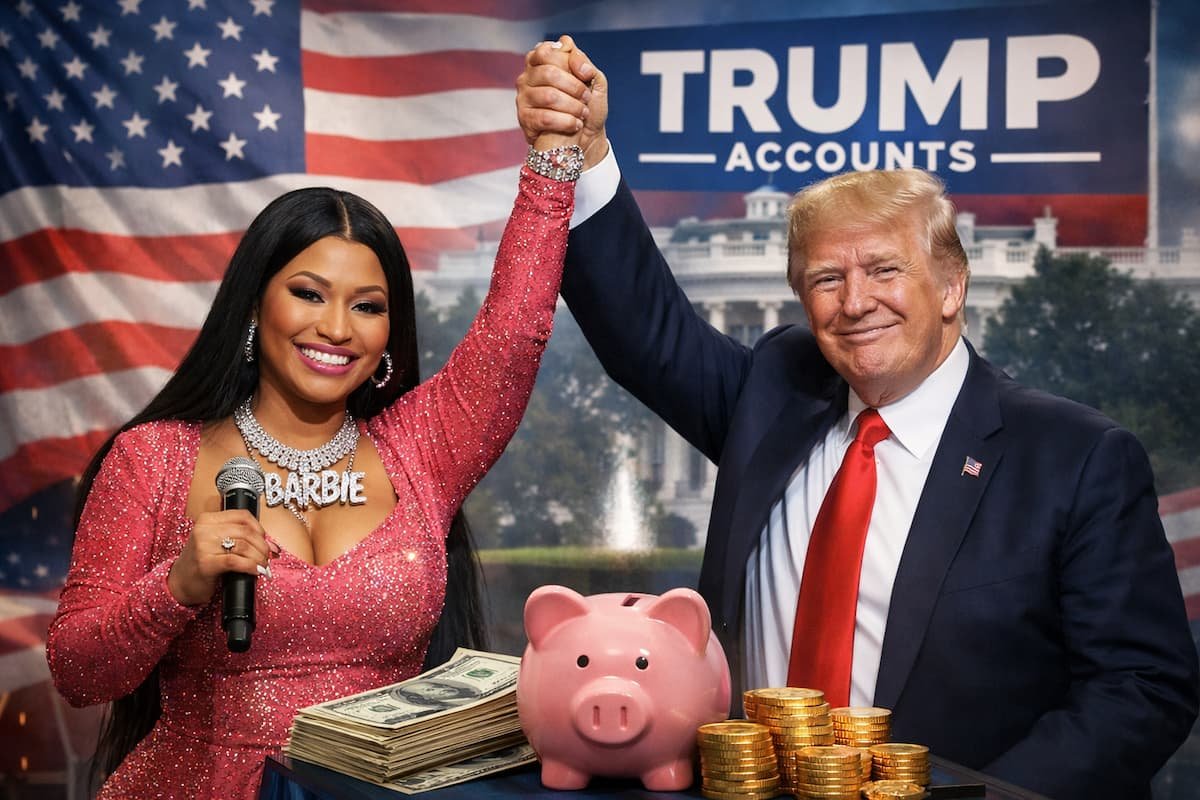
Nicki Minaj, Trump Accounts, and What This Political Alliance Signals
January 29, 2026
Rapper Nicki Minaj’s public embrace of former President Donald Trump’s Trump Accounts initiative marks one of the most striking intersections of celebrity influence and U.S. political policy in recent years, generating both praise and controversy across cultural and political divides.
From Music Icon to Political Endorser
Known globally for her rap career and influence over millions of fans — the “Barbz” — Minaj appeared alongside Trump and Treasury leaders at a high-profile summit promoting Trump Accounts for newborn children. She proclaimed herself his “No. 1 fan,” framing criticism of her support as motivation rather than deterrence.
This moment is notable not just for its visibility but for the broader context it represents: a major artist aligning publicly with a political figure whose policies and rhetoric have been polarizing. The imagery of Minaj holding hands with Trump on stage — something that quickly went viral — symbolizes how celebrity participation can amplify political messaging, regardless of traditional party boundaries.
The Policy at the Center: Trump Accounts
The Trump Accounts program, part of broader legislation dubbed the One Big Beautiful Bill, establishes tax-advantaged investment accounts for children born in the United States between 2025 and 2028. Each eligible child receives a one-time $1,000 seed deposit from the federal government, with parents and employers able to contribute additional funds. These accounts are designed to grow over time — functioning similarly to retirement or savings vehicles, with the intent of fostering long-term financial planning and intergenerational wealth building.
Minaj announced she would pledge between $150,000 and $300,000 to support these accounts specifically for her fan community, reflecting a direct financial engagement beyond mere endorsement.
Strategic Celebrity Endorsements in Politics
Celebrity endorsements in politics are not new, but Minaj’s role here illustrates several strategic dynamics:
- Expanding Audience Reach: Artists with large platforms can bring policy initiatives to audiences that might otherwise remain disengaged from political communication.
- Narrative Framing: By linking financial empowerment for children with her own life story and identity as a mother, Minaj crafts a narrative that resonates emotionally with fans and reframes the policy as a philanthropic gesture rather than solely a political one.
- Cultural Legitimization: Aligning a cultural icon with a political brand — in this case, the Trump administration — acts as a form of social validation that can influence perceptions, particularly among younger or culturally tuned-in demographics.
Yet this strategy carries risks. Many within Minaj’s fanbase and the broader entertainment community find her support divisive, and some critics argue that celebrity political endorsements can oversimplify complex policies or overshadow substantive debate.
Polarization and Public Reaction
Reaction to Minaj’s involvement has been sharply divided. Supporters praise her for advocating financial literacy and opportunity for children, while critics see her alignment with Trump as a departure from her earlier positions and potentially alienating to segments of her audience. Social media was filled with debates over her decision, reflecting how celebrity political engagement can deepen cultural fissures rather than bridge them.
What This Means in the Bigger Picture
Nicki Minaj’s participation in the Trump Accounts launch highlights a broader trend in which cultural figures play increasingly visible roles in shaping political discourse and public policy narratives. Whether this enhances democratic engagement or contributes to polarization depends on how audiences interpret and react to these crossovers.
In a media landscape where visibility often translates to political influence, this episode underscores a complex reality: the boundaries between entertainment and governance are blurring, and public figures now influence not just culture — but policy debates and public perception itself.