Five Stocks to Buy and Hold for the Next Five Years: Long-Term Equity Perspectives
January 26, 2026
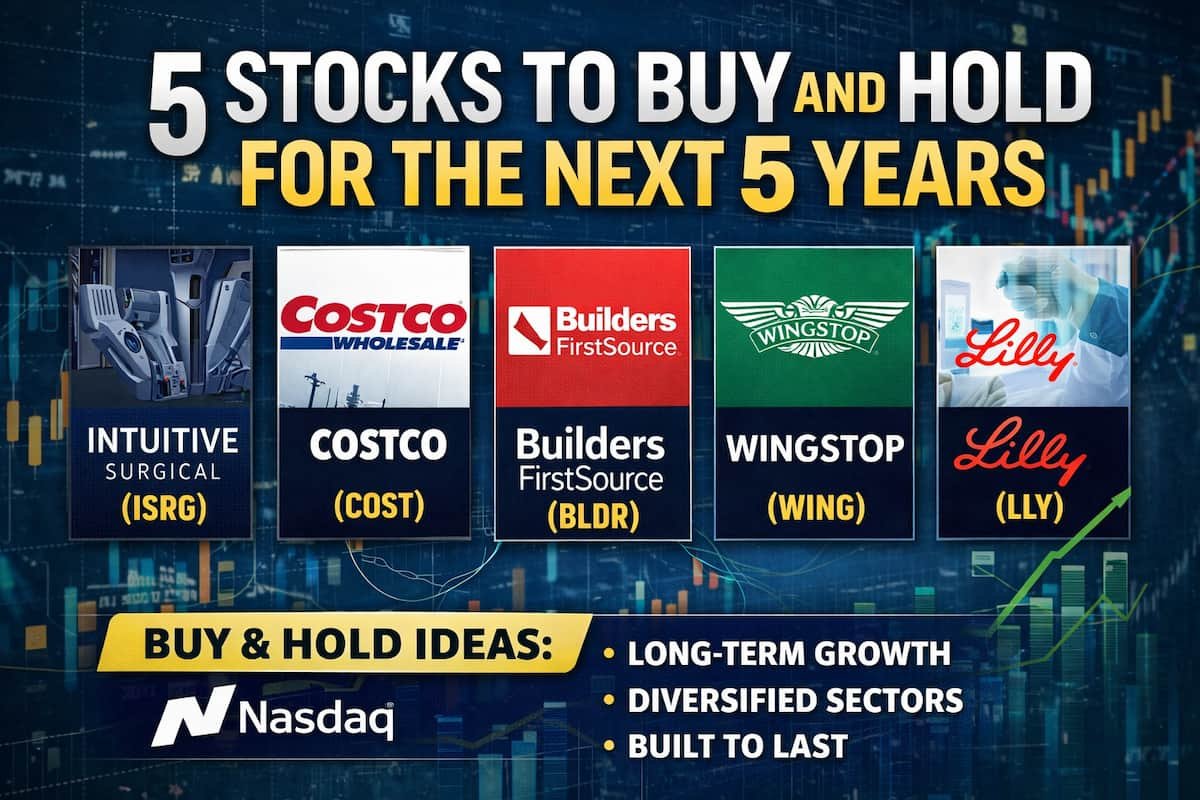
Investors with a long horizon often face the challenge of separating short-term noise from structural growth opportunities. A buy-and-hold strategy — identifying companies with durable business models and growth potential — has historically been one of the most effective ways to build wealth. According to recent insights from Nasdaq, five companies stand out as compelling candidates for long-term investors aiming to hold positions over the next five years.
Here is a breakdown of these selections, the rationale behind them, and key considerations for investors today.
1. Intuitive Surgical (ISRG): Robotic Precision Meets Healthcare Innovation
Intuitive Surgical is a leader in robotic assisted surgery with its Da Vinci surgical systems. Analysts expect the company’s earnings and sales to grow strongly through 2025, reflecting continued adoption of robotic surgery technologies worldwide. Shares have risen meaningfully over the past five years, outperforming the broader market.
Investment thesis: Healthcare technology with sustainable market demand and exposure to procedural automation.
Key risk: Elevated valuation based on future growth expectations, which may compress if adoption slows.
2. Costco Wholesale (COST): Membership-Driven Consumer Resilience
Warehouse retailer Costco has demonstrated exceptional long-term performance and consistent membership-based revenue growth. Earnings are forecast to expand steadily even amid economic headwinds, reflecting the stickiness of its retail model.
Investment thesis: A durable business model with loyal customers and recurring revenue.
Key risk: Premium valuation relative to historical averages could limit short-term gains.
3. Builders FirstSource (BLDR): Cyclical Recovery Play
Builders FirstSource supplies structural products to homebuilders and remodelers. Although the housing market faced downturn pressures due to high mortgage rates, analysts expect a rebound as interest rates stabilize. Over the last five years, BLDR shares have greatly outpaced the market, and forecasts show potential growth resuming in 2025.
Investment thesis: Positioned to benefit from a housing market recovery.
Key risk: Earnings remain sensitive to macroeconomic shifts and interest-rate dynamics.
4. Wingstop (WING): Fast-Casual Growth with Global Expansion
Wingstop, a fast-casual restaurant chain with a growing global footprint, has delivered strong same-store sales growth and significant earnings expansion in recent periods. Revenue and earnings forecasts remain robust, underpinned by international growth opportunities and brand momentum.
Investment thesis: Strong unit economics and scalable growth in dining traffic.
Key risk: High valuation multiples could pressure returns if growth slows.
5. Eli Lilly (LLY): High Growth in Healthcare Innovation
Eli Lilly has become one of the most dynamic pharmaceutical companies in the market, with growth driven by major drug franchises across diabetes, cancer, and other therapeutic areas. Recent earnings and revenue forecasts point to accelerated expansion, suggesting that the company’s innovative pipeline could support long-term returns.
Investment thesis: Leadership in high-growth therapeutic areas with strong R&D capabilities.
Key risk: Regulatory outcomes and competitive pressures could affect drug pricing and market share.
Strategic Takeaways for Long-Term Investors
The five stocks above represent diverse sectors — healthcare technology, consumer retail, industrial distribution, restaurants, and pharmaceuticals — each with distinct growth drivers. For investors considering a five-year horizon, a few strategic considerations are relevant:
- Business Durability vs. Valuation: Growth potential must be balanced against valuation levels. Some of the companies listed trade at elevated multiples, which may require strong execution to justify long-term returns.
- Structural Trends Matter: Companies that benefit from demographic shifts, automation, recurring subscriptions, or innovation pipelines tend to offer more predictable long-term growth.
- Risk Management: Diversification remains essential; even well-ranked stocks can experience volatility if macroeconomic conditions change or competitive intensity rises.
Ultimately, the buy-and-hold strategy rewards patience and disciplined selection. These companies, backed by growth fundamentals and market leadership in their niches, may offer compelling entry points for investors thinking beyond short-term trading.