Doomsday Clock 2026: Why the World Is Closer Than Ever to Midnight
January 28, 2026
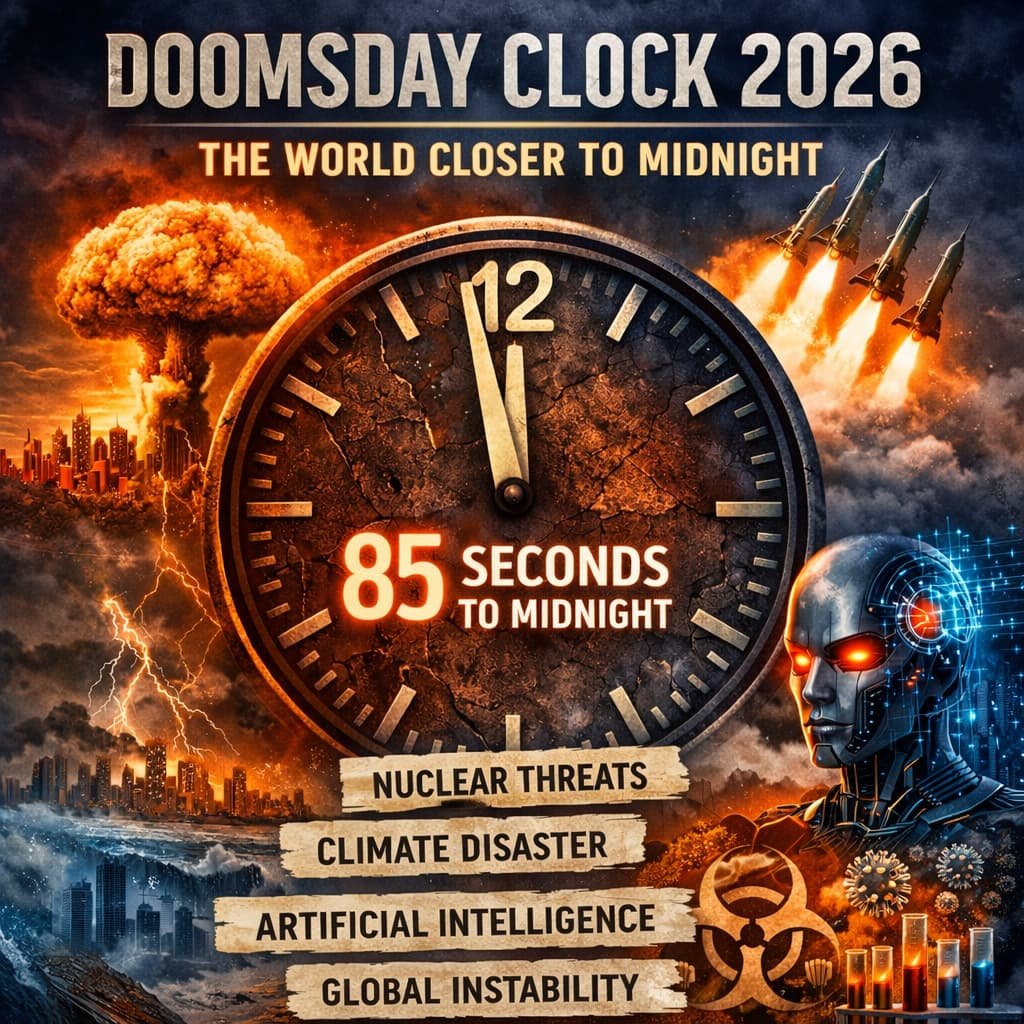
On January 27, 2026, scientists behind the Doomsday Clock moved its hands closer to midnight than at any time in history. The clock now stands at just seconds before midnight, a symbolic point representing global catastrophe.
The decision reflects growing concern over a combination of threats — from nuclear weapons and climate change to artificial intelligence and political instability.
What Is the Doomsday Clock?
The Doomsday Clock was created in 1947 by scientists involved in the Manhattan Project and is maintained by the Bulletin of the Atomic Scientists. It is not a real timekeeping device but a metaphorical measure of how close humanity is to self-destruction.
Midnight represents a point of irreversible disaster. Each adjustment of the clock is based on scientific analysis of global risks.
Why Was the Clock Moved in 2026?
According to experts, several factors pushed the clock closer to midnight this year:
- Nuclear tensions remain high, with weakened arms control agreements and growing geopolitical conflicts.
- Climate change continues to intensify, with record temperatures and more frequent extreme weather events.
- Artificial intelligence and other emerging technologies are developing faster than global regulations can keep up.
- Disinformation and political division undermine international cooperation.
Scientists stress that these risks do not exist separately — they interact and amplify one another.
The Psychological Impact
CNN’s report highlights another important angle: the effect of constant global crisis on mental health.
Living with continuous warnings of disaster can lead to:
- Chronic anxiety
- Emotional fatigue
- A sense of helplessness
- “Doomscrolling” and information overload
Psychologists say that while awareness is important, humans are not built to live in a constant state of emergency. When every headline suggests catastrophe, people may shut down instead of acting.
Is the Clock Predicting the End of the World?
No. The Doomsday Clock does not predict when the world will end. It is a warning system, not a prophecy.
Its purpose is to push leaders and societies toward:
- Stronger diplomacy
- Better climate policies
- Responsible use of technology
- Clearer communication based on science
The clock can move backward as well — and it has in the past when tensions eased and cooperation improved.
What Can Individuals Do?
While global threats feel overwhelming, experts suggest focusing on:
- Staying informed without overloading yourself
- Supporting science-based policies
- Practicing media balance and mental self-care
- Taking small actions that contribute to environmental and social stability
As CNN notes, personal resilience matters just as much as political decisions.
Final Thought
The Doomsday Clock reaching its closest point to midnight is not a declaration of doom — it is a call to attention.
Humanity still controls the hands of the clock. Whether they move forward or backward depends on decisions made today.